Some years ago when I was in the seminary, an older priest in a rectory where I stayed had an unusual piece of furniture in his sitting room. He used it like a chest or large travel trunk. He stored books in it. I told him it looked like a coffin. He said it was. “One day I will be buried in that.”
Sure enough, at his funeral some ten years later, I saw that plain pine box that had sat against the wall in his sitting room. What once held the treasure of his books waiting to be read again now held the treasure of his body waiting to rise again.
Coffins, often called caskets today, have become a bit too removed from the old wooden boxes that once sufficed for most. Made of strong steel, with airtight seals and cushioned satin interiors, they seem designed to insulate not only the dead, but also us from the reality that the earth must reclaim our bodies until the great resurrection of all the dead. Add to that the fact that these sealed capsules are then placed in concrete liners (to preserve the level of the round above), and burial really doesn’t seem to be burial anymore. It’s more like storage in an underground basement or cellar. Modern life can be very insular, even in death.
I do not wish to appear insensitive. Burial customs vary from age to age and have various things to recommend them and to critique about them. Death is perhaps the hardest reality we face, not merely our own but also the deaths of those we love.
The beautiful video below shows a man making a traditional wooden coffin. For him it is obviously a very spiritual act, deeply rooted in his Catholic Faith. Such care and thoughtfulness goes into each action of the process!
It might strike you as odd to watch a man build a coffin. But take the time to watch this three-minute video. The coffin maker speaks great wisdom and love as he plies his craft. It is clear this is no mere box; it is a precious and sacred container for the body and a doorway for the soul.
Here are a couple of his quotes that I find especially meaningful:
I never feel like it’s finished. But I guess that’s a fit thing since that’s how we likely feel at the end of our lives too.
I think one of the most important aspects of the coffin is that it can be carried. I think we’re meant to carry each other. Carrying someone you love is very important when we deal with death … to know that we played a part and shouldered our share of the burden … If we make it too easy we deprive ourselves of a chance to get stronger so that we can carry on.
There is a rather humorous aspect of the story of the Tower of Babel in the Book of Genesis. You likely know the basic story, which begins with the men of that early time saying, Come, let us build ourselves a city, with a tower that reaches to the heavens, so that we may make a name for ourselves (Gen 11:4). It was an image of pride, of grandiosity.
The humor is that when the great tower, with its top reaching to the heavens, is finally built, it is actually so puny that God has to come down from Heaven in order to see it! The text says, And the LORD came down to see the city and the tower, which the children of man had built (Gen 11:5).
Now of course God, as omniscient, clearly sees everything, and the humor in the text is not in some primitive notion of God. Rather the humor is for our benefit. In effect it says that our greatest, tallest, most prominent and glorious work—a tower that we saw as reaching Heaven itself—is in fact so small that God has to stoop to “see” it. He has to descend to get even a glimpse of it. What ultimately DOES alarm God is how colossal our pride is, and thus he has to humble us by confusing our language and scattering us about the planet.
I recalled this story as I viewed the video below. It is wonderful footage of Earth, taken from the Space Shuttle. There is audio commentary by a NASA scientist explaining some of the features we are seeing and where on the globe we are looking as the images pass by. The view is truly remarkable. But what is even more remarkable is what we do NOT see: us!
It is an astonishing thing that even though the shuttle is passing over highly populated areas there is no visual evidence that we even exist. No cities or buildings are visible; no planes streak through the skies; even large scale agricultural features seem lacking. There is only one mention of a color difference across the Great Salt Lake, and that is due to a railroad bridge preventing circulation. But the bridge is in no way visible, only its effect.
We think of ourselves as so big, so impressive. And yet even in low Earth orbit, we cannot be seen. It is true that at night our cities light the view, but during the day next to nothing says we are here. Even the magnified picture on my 30″ iMac screen shows no evidence of us below.
And having viewed the video, I think of Psalm 8:
O Lord, our Lord, how majestic is your name in all the earth! You have set your glory above the heavens … When I consider your heavens, the work of your fingers, the moon and the stars, which you have set in place, what is man that you are mindful of him, the son of man that you care for him? Yet, You made him a little lower than the angels and crowned him with glory and honor. You made him ruler over the works of your hands; you put everything under his feet: all flocks and herds, and the beasts of the field, the birds of the air, and the fish of the sea, all that swim the paths of the seas. O Lord, our Lord, how majestic is your name in all the earth!
Yes, we are so powerful (by God’s gift) and yet so tiny as to be nearly invisible from a short distance into space. Our mighty buildings rise, but they rise on a speck of space dust called Earth, which revolves around a fiery point of light called the Sun. And our huge sun is but one point of light in the Milky Way galaxy of over 100 billion stars. And the Milky Way galaxy, so huge to us as to be nearly incomprehensible, is but one of an estimated 200 billion galaxies.
What is man O Lord that you are mindful of him? Jesus says of us, And even the very hairs of your head are all numbered (Matt 10:30). Yes God, who knows the numbers of the stars and calls them by name, also knows the number of the hairs on each of our heads. Nothing escapes him.
And old preacher’s saying goes, “We serve a God who sits high, yet looks low!” Indeed, never forget how tiny you and I are, yet never cease to marvel that God knit you together in your mother’s womb and sustains every fiber of your being. We cannot even be seen from low Earth orbit, but God, who sees all, looks into our very heart. Do not cease to marvel that, though tiny, you and I are wonderfully, fearfully made (Psalm 139), and He has put all things under our feet.
I write this blog post humbly confessing that I am not an economist or a politician. I am not an expert on the oil industry or on “alternative fuels.” Neither am I an agricultural expert. I write as a priest and a moral theologian to ponder a puzzling trend that I might provocatively title “Burning food for fuel.”
Most notably, this is done in the production of ethanol, which uses corn. Increasingly, the government, likely pressured by certain industries and lobbies, is requiring that 10% of fuels be composed of ethanol.
Of course this requires an enormous amount of corn, which would seem to skew agriculture and the food supply. At a bare minimum it would seem that the price of corn would rise. Corn is a fairly basic staple of the world’s food supply and raising its price would seem to harm the poor especially. Further, as corn becomes more lucrative, it seems likely that more of it would be planted and less of other necessities such as rice, barley, and other grains. This doesn’t seem very good either.
Consider some excerpts from an article (on Oxfam America’s website) that I read recently:
Ethanol has been touted as the solution to our energy and climate crises. [But] Ethanol is not the answer to our oil dependency. Even if all the corn grown in the US was used for fuel, it would replace only one out of six gallons.
Meanwhile, ethanol is contributing to global hunger. Last year, 40 percent of corn grown in the US went to fuel instead of food. If all the land used to grow biofuels for the EU in 2008 had instead been used to grow food, it could have fed 127 million people for an entire year. Major land grabs are happening all over the world, often propelled by the market’s demand for biofuels, leaving marginalized communities without access to traditional land and water to grow food….
The governors of North Carolina and Arkansas have asked the EPA to waive the renewable fuel standards mandate, which requires at least 10 percent of unleaded gasoline be made from ethanol. Waiving the corn ethanol mandate will lead to an estimated 7.4 percent drop in global corn prices, which will in turn lower prices for meat, milk, eggs, and more. For people living in poverty who spend up to 75 percent of their income on food, this small change can make a big impact.
Turning corn into fuel only compounds global hunger. America cannot build our own energy security on the back of people living in poverty—it is morally indefensible and wrong for our own energy, climate, and national security interests. We have an opportunity right now to press the pause button on misguided US corn ethanol policy by telling the EPA to waive the corn ethanol mandate.
I cannot vouch for or verify all of the points in this article, and I know nothing about Oxfam. But to put it again in a provocative way: burning food for fuel seems to go against common sense to me.
Food is a very precious and necessary commodity. Fuel is surely important, but it is secondary to food. Given that we can easily fuel our machinery with something other than food, it seems foolish to burn large quantities of food for fuel.
I would like to know your thoughts on this. Perhaps you will want to school me on some basic economic issues that I’m forgetting. Perhaps it is possible that we have such an overabundance of food that burning some of it for fuel actually makes sense.
But something tells me this is a very bad idea—maybe even immoral if it has severe effects on the poor and the hungry throughout the world, as I suspect it will.
Something else tells me that this is rooted more in an irrational fear and hatred of the petroleum industry, pressure by agricultural lobbies, and a misguided environmentalism that worries more about pollution than feeding the hungry.
But I realize these are complex issues, and what I really want to do is generate a discussion, share information, raise concerns, and perhaps alleviate some of them. Let me know what you think.
The battle against temptation in our lives is, of course, an ongoing struggle. Some moments and periods of our life provide more temptation than others, but no day goes by without at least some sort of temptation. While it is important to battle temptation in the moment, it is also important to build ourselves up by grace so that in moments of temptation we can draw on that strength and preparation to more easily win the battle.
Obviously, recourse to prayer, the Sacraments, and the Scriptures are essential in building ourselves up. But it is also instructive for us to observe how Jesus prepared Himself for the temptations that He faced. The Scripture affirms that He was tempted in every way that we are, yet without sin (cf Heb 4:15). Two important moments of temptation for Jesus that are depicted in the Scriptures are at the end of His time in the desert and in the garden of Gethsemane.
Let’s look in particular at what Jesus did to prepare Himself for the devil’s onslaught toward the end of His forty days in the desert. We can distinguish several important things He did to prepare for the moment of the devil’s attack.
I. In accepting baptism by John in the Jordan River for our sake, Jesus illustrates that it is important for us to deepen our own baptismal renewal by the Holy Spirit, and the experience of God’s love. Though Jesus did not have any sins that needed to be washed away, He humbly entered the Jordan for our sake, bringing into the water His mystical Body, which includes us. There He acquired for us, in a kind of prevenient way, the cleansing of our sins by repentance and baptism. He also prefigured for us the coming of the Holy Spirit to sanctify us and the Father’s great love for us, calling us his beloved sons and daughters.
Each of these gifts is important for us to frequently renew and meditate upon as a way of strengthening us against temptations that will come.
A. We must learn to appreciate the beautiful gift of being cleansed of our sins. We must learn to esteem the baptismal innocence which was ours as we came through those waters cleansed and beautifully renewed. What a precious gift to appreciate and to seek to preserve by daily repenting of our sins, calling on the Lord’s mercy, and frequently celebrating the Sacrament of Confession. This is a great help against temptation since, learning to more fully esteem the great gift of baptismal innocence, we are motivated to preserve it through the grace of the Sacraments.
B. Jesus also acquired for us in the river Jordan the great gift of the Holy Spirit, who descended upon Him like a dove. What a magnificent gift: that we would become temples of the Holy Spirit, who lives within us, sanctifying us and offering us every good grace. Yet too easily we forget this, for the Spirit dwells within us quietly, respectfully doing his work as does a careful surgeon. It is for us to ask for an anointing of the Spirit, to be aware of and respectful of His wonderful, mysterious, and powerful work within us. As we grow in knowledge and appreciation of this tremendous gift, we are enabled to draw consciously upon the grace and strength of the Spirit and see our lives gradually transformed. Here too is a great help in making us stronger so that when temptations arise, they are more easily conquered.
C. Jesus also receives for us the beautiful love of the Father. For as the Father looks to Jesus he says, Here is my beloved Son in whom I am well pleased. And yet, mysteriously, this great acclamation extends also to us, who are in Christ. It is such a beautiful and necessary gift that we should experience God’s tender love for us. How encouraging and transformative it is for us to experience that we are beloved, that the Father has a tender love for us. Experiencing this love, we are equipped to respond with love and the holy reverence that makes us fear to ever offend the Father whom we love so much. When we love God, we love what God loves, and we love those whom God loves. And thus we desire to keep His Commandments not because we have to, but because we want to. And here is yet another way to see ourselves built up in love, so as to better avoid and have victory in moments of temptation.
After His baptism in the Jordan, Jesus continues to demonstrate for us other ways to build ourselves up so as to prepare for and have victory over temptation.
II. The Forty days of fasting and prayer in the desert. There are three keywords here; let’s look at them in reverse order.
A. The desert is a symbol of completely separating oneself from the world, of drawing apart from the world with all of its seductions, its lust of the eyes, and its desire for power and comfort. In the desert, one feels anything but powerful. Just a few minutes in the hot desert will humble even the strongest of persons. The spiritual desert is devoid of most of the luxuries and comforts of the world. It is a place of great simplicity, a place where less is more. Trying to carry around many things in the desert is quite foolish and results in needless expenditure of energy and depletion of necessary hydration. In the desert, essentials are emphasized and extraneous things are shed. Although the Church emphasizes this during Lent, one does well to embrace desert experiences throughout the year. As we gradually renounce the world and develop a capacity for the simplicity of the desert, fewer of the things of this world tempt us. And when they do tempt us, we see more clearly the lies of the world and prefer the simplicity and clarity of the desert.
B. Prayer – The prayer that assists us in overcoming temptation is not so much intercessory prayer (in which we tell God what we want or need), but rather prayer understood as the prayer of union, in which we seek to unite and align our heart with the heart, the mind, and the will of God. This is not the prayer that asks for what we want, but the prayer that asks God what He wants. As we enter into deeper union with God through this prayer, our heart, mind, and will begin to align with God’s great vision for our life. Through this sort of prayer, we love the beauty and goodness of God’s truth and begin to abhor injustice. We begin to desire holiness and find the sinful attitudes and perceptions of the world increasingly obnoxious and unattractive. Thus we are assisted in battling temptations to sin as our desires become more conformed to divine will.
C. Fasting –We may think first here of food. But spiritually it may involve other things. Perhaps it means intentionally removing some of the things in our life that clutter it: television (a terrible time bandit), the news, politics, etc. Perhaps, even for just a few days, we can create something of a fasting experience by intentionally screening these areas off and using the time and mental faculties for spiritual reading, recollection, and so forth. Fasting helps strengthen us against temptations because it trains us in certain forms of self-mastery. Giving up or setting aside certain lawful pleasures or interests, even for a relatively short time, is a good way to train ourselves to resist unlawful pleasures and interests.
Resisting the temptation to sin is easier for those who have spent time in the desert and in fasting, for in going into the wilderness we learn to lean on the Lord, and in fasting we learn to shed some of the unnecessary excesses of a worldly life.
Here then are some teachings of Jesus on how to be stronger so as to avoid temptation and to be prepared for the temptations that will still inevitably come. We are not simply to be sitting ducks. We need to be prepared ahead of time for the temptations that surely await us.
Jesus, though sinless, was still tempted, and He gives us very good picture of what it means to be prepared and ready for the temptations of life.
This song by Tallis is “In Jeiunio et Fletu” (In fasting and weeping). The singers are all wearing coats in the chapel of this old castle. Perhaps the singers (or the owner of the castle) are fasting from heat or other creature comforts as they sing this lament for sin and seek strength against temptation!
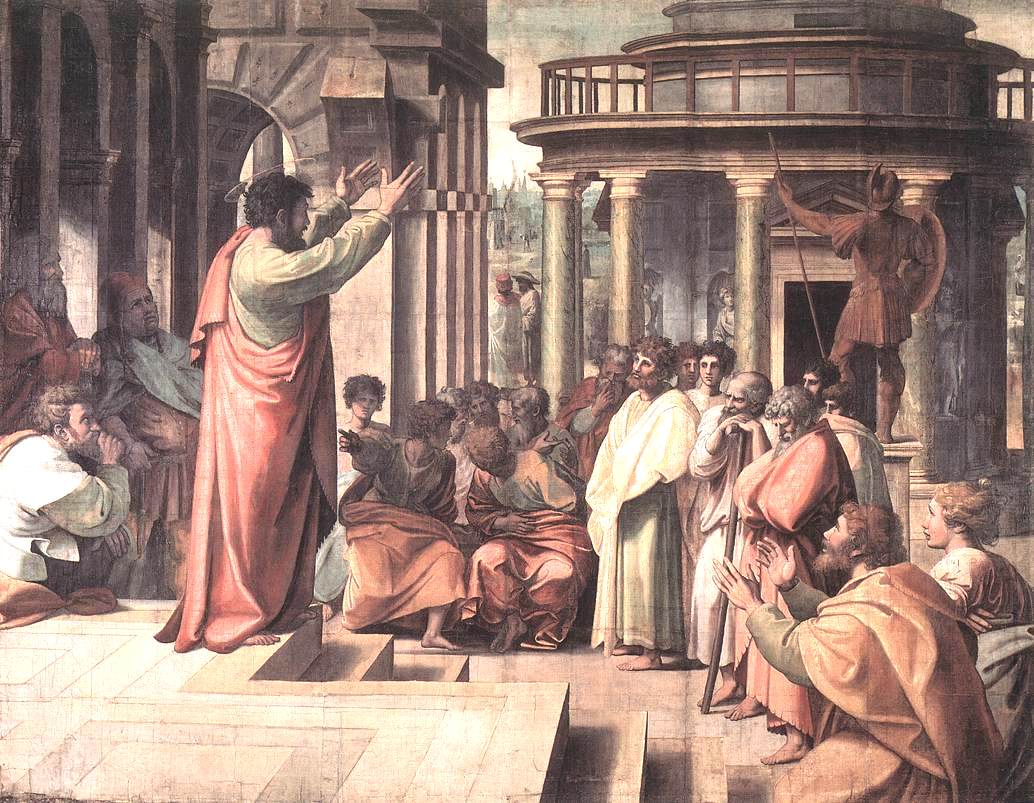
The first reading from today’s Mass is Paul’s farewell speech to the presbyters (priests) of the early Church. Here is a skilled bishop and pastor exhorting others who have pastoral roles within the Church. Let’s take a look at this text and apply its wisdom to Bishops and priests as well as to parents and other leaders in the Church.
Paul’s Farewell Sermon – The scene is Miletus, a town in Asia Minor on the coast not far from Ephesus. Paul, who is about to depart for Jerusalem, summons the presbyters (priests) of the early Church at Ephesus. Paul has ministered there for three years and now summons the priests for this final exhortation. In the sermon, St. Paul cites his own example of having been a zealous teacher of the faith who did not fail to preach the “whole counsel of God.” He did not merely preach what suited him or made him popular; he preached it all. To these early priests, Paul leaves this legacy and would have them follow in his footsteps. Let’s look at excerpts from this final exhortation. First the text, and then some commentary:
From Miletus Paul had the presbyters of the Church at Ephesus summoned. When they came to him, he addressed them, “You know how I lived among you the whole time from the day I first came to the province of Asia. I served the Lord with all humility and with the tears and trials that came to me … and I did not at all shrink from telling you what was for your benefit, or from teaching you in public or in your homes. I earnestly bore witness for both Jews and Greeks to repentance before God and to faith in our Lord Jesus … But now, compelled by the Spirit, I am going to Jerusalem … But now I know that none of you to whom I preached the kingdom during my travels will ever see my face again. And so I solemnly declare to you this day that I am not responsible for the blood of any of you, for I did not shrink from proclaiming to you the entire plan of God … (Acts 20:1-38 selected).
Here then is the prescription for every Bishop, priest, deacon, catechist, parent, and Catholic: that we should preach the whole counsel (the entire plan of God). It is too easy for us to emphasize only that which pleases us, or makes sense to us, or fits in with our world view. There are some who love the Lord’s sermons on love, but cannot abide his teachings on death, judgment, Heaven, and Hell. Some love to discuss liturgy and ceremony, but the care of the poor is far from them. Others point to His compassion, but neglect His call to repentance. Some love the way He dispatches the Pharisees and other leaders of the day, but suddenly become deaf when the Lord warns against fornication or insists that we love our spouse, neighbor, and enemy. Some love to focus inwardly and debate over doctrine, but neglect the outward focus of true evangelization to which we are commanded (cf Mat 28:19).
In the Church today, as a whole, we too easily divide out rather predictably along certain lines and emphases: life issues here, social justice over there; strong moral preaching here, compassionate inclusiveness over there. When one side speaks, the other side says, “There they go again!”
And yet somewhere we must be able to say, with St. Paul, that we did not shrink from proclaiming the whole counsel of God. While this is especially incumbent on the clergy, it must also be true for parents and all who attain any leadership in the Church. All of the issues above are important and must have their proper places in the preaching and witness of every Catholic, both clergy and lay. While we may have gifts to work in certain areas, we should learn to appreciate the whole counsel and the fact that others in the Church may be needed to balance and complete our work. It is true that we must exclude notions that stray from revealed doctrine, but within doctrine’s protective walls it is necessary that we not shrink from proclaiming and appreciating the whole counsel of God.
And if we do this we will suffer. Paul speaks above of tears and trials. In preaching the whole counsel of God (not just your favorite passages or politically correct, “safe” themes), expect to suffer. Expect to not quite fit in with people’s expectations. Jesus got into trouble with just about everyone. He didn’t offend just the elite and powerful. For example, even His own disciples puzzled over His teachings on divorce saying, “If that is the case of man not being able to divorce his wife it is better never to marry!” (Matt 19). Regarding the Eucharist, many left Him and would no longer walk in His company (John 6). When Jesus spoke of His divine origins, many took up stones with which to stone Him, but He passed through their midst (Jn 8). In addition, Jesus spoke of taking up crosses, forgiving your enemies, and preferring nothing to Him. He forbade even lustful thoughts, let alone fornication, and insisted we must learn to curb our unrighteous anger. Yes, preaching the whole counsel of God is guaranteed to earn us the wrath of many.
Sadly, over my years as a priest, I have had to bid farewell to congregations. This farewell speech of Paul is a critical passage whereby I examine my ministry. Did I preach even the difficult stuff? Was I willing to suffer for the truth? Did my people hear from me the whole counsel of God, or just the safe stuff?
How about you? Have you proclaimed the whole counsel of God? If you are clergy, when you move on; if you are a parent, when your child leaves for college; if you are a Catechist, when the children are ready to be confirmed or have reached college age; if you teach in RCIA, when the time comes for Easter sacraments—can you say you preached it all? God warned Ezekiel that if he failed to warn the sinner, that sinner would surely die for his sins but that Ezekiel himself would be responsible for his death (Ez 3:17 ff). Paul is able to say he is not responsible for the death (the blood) of any of them for he did not shrink from proclaiming the whole counsel of God. How about us?
The whole counsel of God; not just the safe stuff, the popular stuff, not just the stuff that agrees with my politics and those of my friends. The whole counsel, even the difficult stuff, the things that are ridiculed. The Whole Counsel of God.
This video contains the warning to the watchmen (us) in Ezekiel 3. Watch it if you dare.
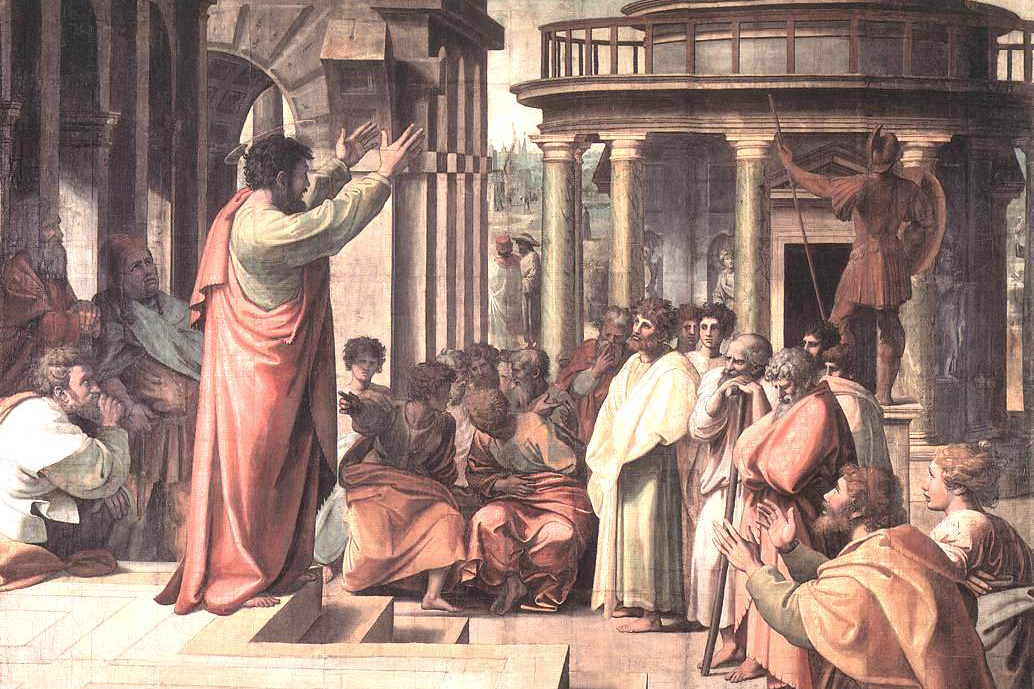
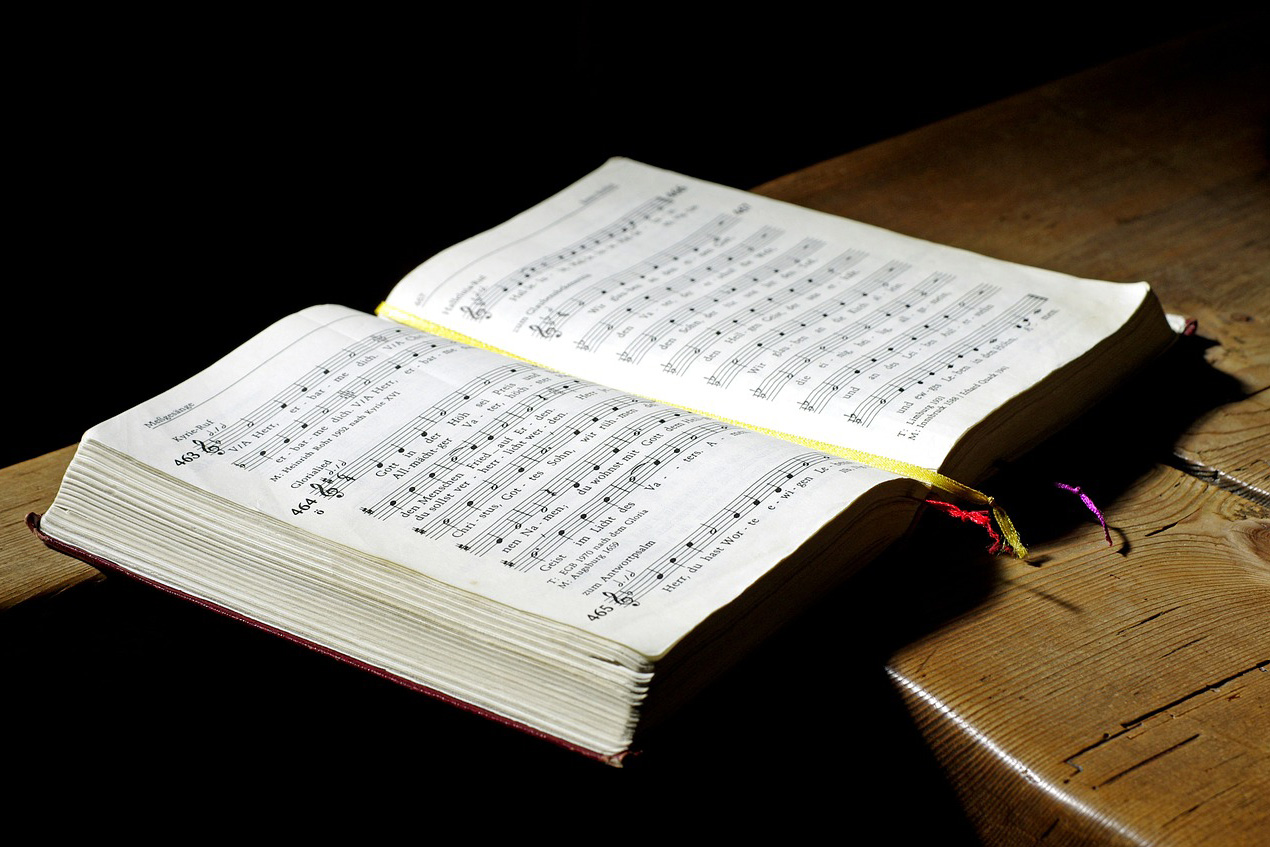
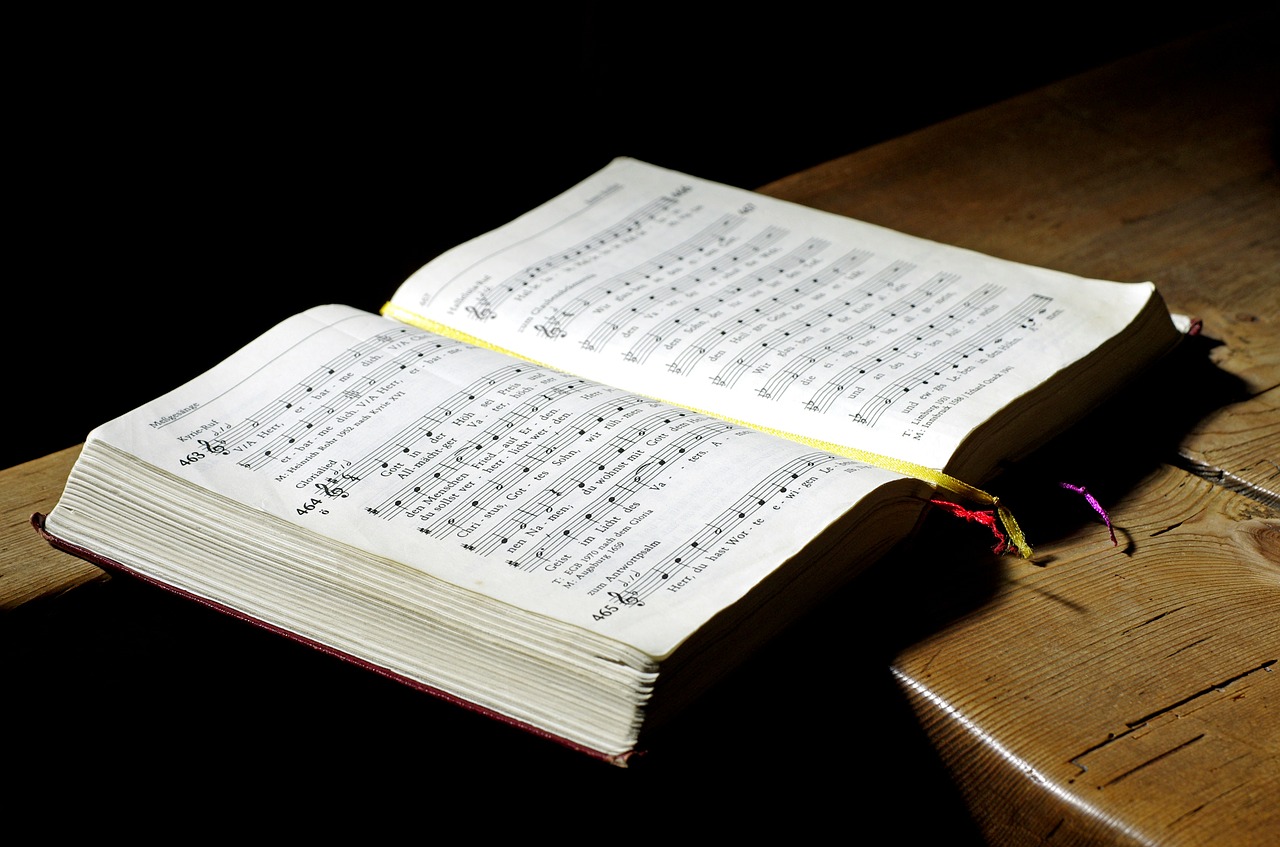
One of the more prominent features of Protestant denominations over the decades was hymn singing. Get in your time machine, go back 50 years to a service for any Protestant denomination, and you would find every member of the congregation on his feet, hymnal in hand, singing quite loudly, even harmonizing the old familiar hymns: Onward Christian Soldiers … Amazing Grace … When the Roll is called up Yonder … More About Jesus … Praise God from Whom All Blessings Flow!
Catholics congregations were rather different. Low Masses in Latin were common in which there was little or no singing. High Mass featured complex music that a trained choir largely handled. And the few hymns the Catholics did know quite well were generally not sung with the gusto anywhere near that of the Protestants.
I’ll admit it; I’m a big fan of the metrical hymns of the Protestant tradition. One of the regrets I have is that in the years just after the Second Vatican Council when vernacular songs were permitted, we did not borrow more heavily from the English and German traditions of hymns.
Hymns are stately, easy to learn, and have memorable melodies. They were also metrical, which means that they were sung to a steady beat and almost never had the complicated rhythms of many modern church songs. Congregations have a hard time singing syncopated rhythms (rhythms that are in some way unexpected, making part or all of a tune or piece of music off-beat).
Many of the old Protestant hymns, especially those from the English tradition, are actually magnificent translations of the Latin hymns of the ancient Catholic Church. Many of them also beautifully paraphrase the Psalms. As such, their themes were biblical, and richly theological.
A beautiful example of this is the English translation of a verse from the beautiful hymn by St. Ambrose (Veni Redemptor Gentium):
Thy cradle here shall glitter bright, and darkness breathe a newer light; An endless light that shines serene, Where twilight never intervenes.
And there is this line from the well-known English hymn “For all the Saints”:
And when the strife is fierce, the warfare long; Steels on the ear a distant triumph song and hearts are brave again and arms are strong Alleluia!
One final example is from the grand hymn “O Worship the King”:
Thy bountiful care, what tongue can recite? It breathes in the air, it shines in the light; Thy mercies how tender, how firm to the end, our Maker, Defender, Redeemer, and Friend.
I love to sing and listen to these old hymns, and I love to play them at the organ.
But lo and behold, it seems the old hymns are dying out even in many of the Protestant denominations, and especially in those of the Evangelical sort. Paradoxically, in many of the old mainline Protestant denominations, which are theologically and morally quite liberal, the old hymns are still sung. Many of the Evangelical denominations, which adhere more closely to biblical teachings and morality, are now using Christian contemporary music, largely replacing the old hymns.
But most Christian contemporary music is really meant more to be listened to than to be sung, and it certainly is not designed to be sung by a large group of people.
Here are some excerpts from a recent article by Thom Schulz at the Holy Soup Blog: (I have added a few remarks of my own in plain red text.)
Looking around the church last Sunday I noticed that the majority weren’t singing … That’s been the case for years now–in churches large and small. What used to be congregational singing has become congregational staring … (Looks and sounds like a typical Catholic Congregation.)
What happened to the bygone sounds of sanctuaries overflowing with fervent, harmonizing voices from the pews, singing out with a passion that could be heard down the street? I suspect it’s a number of unfortunate factors.
Increasingly, the church has constructed the worship service as a spectator event … It seems it’s paramount for church music to be more professional than participatory. The people in the pews know they pale in comparison to the loud voices at the microphones.(Yes, this is certainly the case in most megachurches, which are even built like theaters. Many of the services there look more like productions than worship services.)
[Further] The musicians’ volume is cranked up so high that congregants can’t hear their own voices, or the voices of those around them, even if they would sing. So they don’t sing. What would it add? The overwhelming, amplified sound blares from big speakers, obliterating any chance for the sound of robust congregational singing.(Yes, I learned this as an organist: if I played too loud, people stopped singing. The singing of the faithful needs to be supported and accompanied, not drowned out and overwhelmed. In some Catholic parishes, volume from musicians and even lectors and preachers is a problem. Now even some smaller church structures have massive PA systems that overload the listeners rather than enhance their listening.)
Sometimes people refrain from singing because the songs are unfamiliar, hard to sing, or just cheesy … I long for an environment that evokes my real, heartfelt, vocal participation. (As stated above it is really rather difficult to get a larger congregation to sing syncopated music. Clear, metrical music is better if congregational participation is desired. Just because some song by a soloist sounds nice doesn’t mean it’s easy to sing. I get the impression that a lot of Catholic contemporary music is really written for soloists and then forced upon the congregation, who then vote with their mouths—which stay shut during the song. All the frantic waving of the cantor’s arms doesn’t really change the situation either. If something is singable for the congregation, the wild gesticulation of the cantor is not needed.)
At any rate, I’ll just conclude by saying again that I favor metrical hymns for congregational singing, and there is a noble history of some five hundred years on which to draw. There are some nice Gregorian hymns too. I know the comments section below is bound to attract more than a few comments about ditching hymns as well and singing the Introit, the Gradual, etc. But honestly, the number of parishes capable of accomplishing that reasonably are few. Further, even if a trained schola exists in your parish, the topic here is congregational singing. Sadly, that reality seems to be disappearing—even in the denominations that once resounded with hymns and enthusiastic singing by most of the congregation. It’s too bad, really.
I’m interested in your experience of congregational singing. I find that in most parishes less than 20% even make a pretense of singing. My own congregation is a bit of an exception since we use a lot of Gospel hymns and music that are very easy for the congregation to sing: lots of refrains and memorable melodies. What of your parish?
Here are two grand Hymns from the English Church:
And here I am playing the organ—an older melody for the Tantum Ergo that was popular in older German parishes.
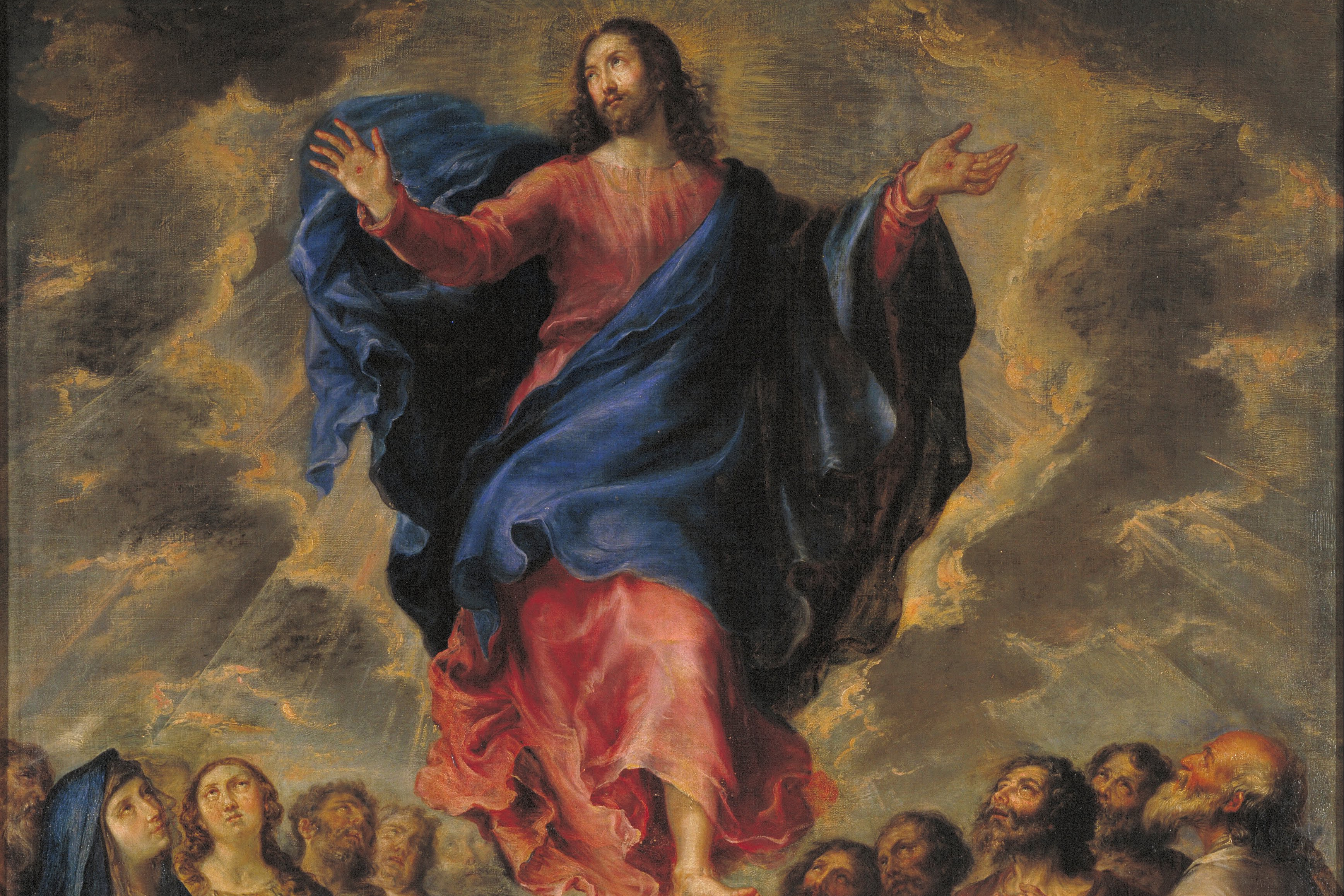
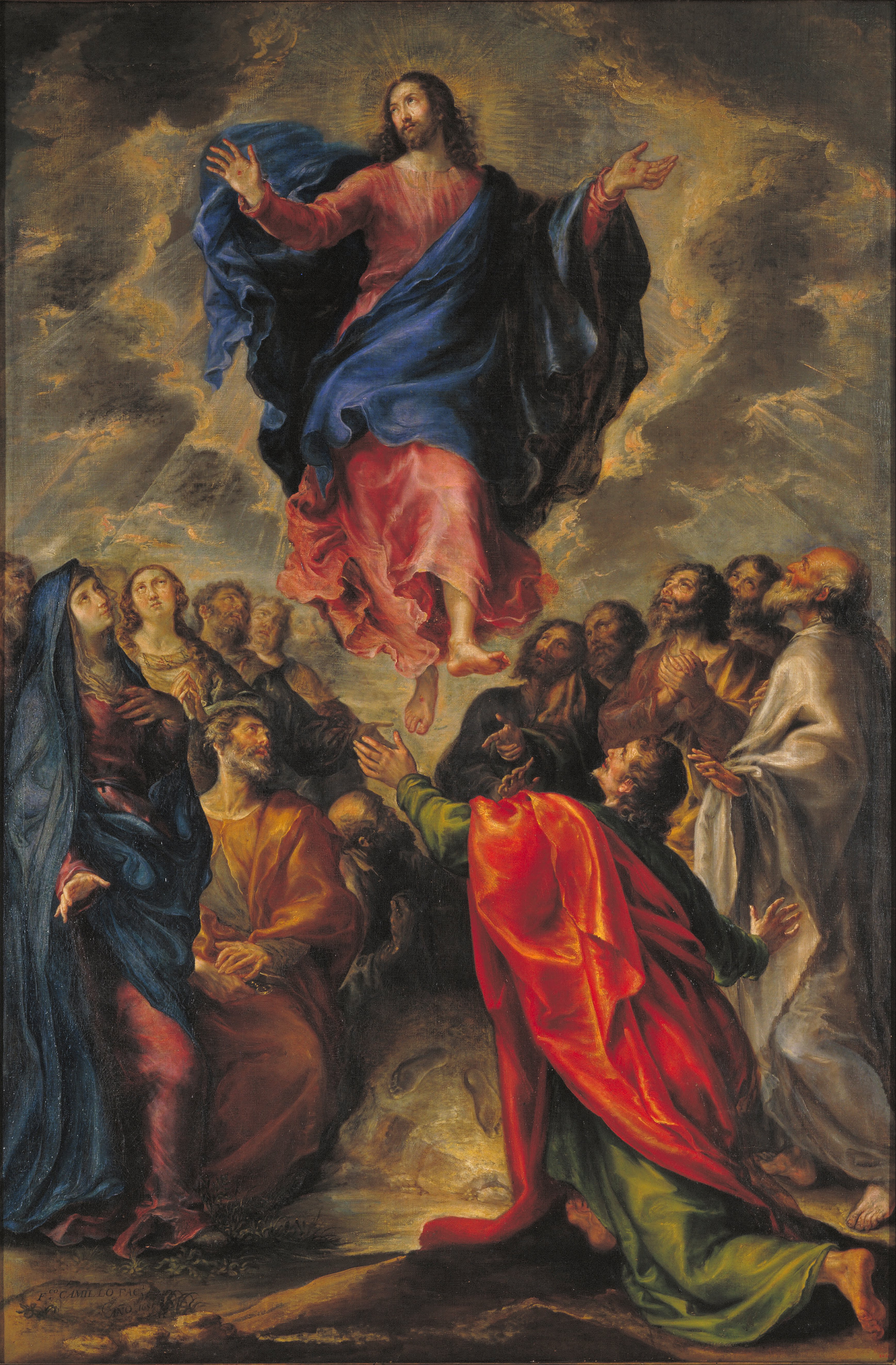
In more dioceses than not, the Feast of the Ascension is celebrated this weekend. The liturgist in me regrets the move, but here we are any way. So let’s ascend with the Lord, three days late!
This marvelous feast is not merely about something that took place two thousand years ago. For though Christ our head has ascended, we the members of his body are ascending with him. Since he was ascended, we too have ascended. In my own life as a Christian, I am brought higher every year by the Lord, who is drawing me up with Him. This is not some mere slogan, but something I am actually experiencing. An old song says, I was sinking deep in sin, far from the peaceful shore. Very deeply stained with sin, sinking to rise no more. But the master of the sea, heard my despairing cry. And from the waters lifted me. Now safe am I. Love Lifted me, When nothing else could help. Love lifted me!
Yes, the feast of the Lord’s Ascension is our feast too, if we are faithful. Let’s look at it from three perspectives.
I. The Fact of the Ascension. – The readings today describe a wondrous event that the Apostles witnessed. The Lord, by his own power, is taken to heaven. In so doing He opens a path for us, too. The gates of paradise swing open again: Lift up your heads, O gates! and be lifted up, O ancient doors! that the King of glory may come in! (Psalm 24:7). In Christ, man returns to God. Consider three things about the Ascension:
A. The Reality – Imagine the glory of this moment. Scripture says, As they were looking on, he was lifted up and cloud took him from their sight … they were looking intently in the sky as he was going (Acts 1:9). So impressive was the sight that the angels had to beckon them to get along to Jerusalem as the Lord had said, “Men of Galilee,” they said, “why do you stand here looking into the sky? This same Jesus, who has been taken from you into heaven, will come back in the same way you have seen him go into heaven” (Acts 1:11). Yes, it was glorious. Jesus had once said as a summons to faith, What if you were to see the Son of Man ascending to where he was before? (John 6:62). He had also encouraged them saying, Truly, truly, I say to you, you will see heaven opened, and the angels of God ascending and descending upon the Son of man (John 1:51). So here is a glorious reality and a fulfillment of what Jesus had said.
B. The Rescue – In the Ascension, it does not seem that the Lord entered Heaven alone. As we have remarked, in His mystical body we also ascend with Him. But consider too this remarkable text that affirms that: Therefore it is said, When he ascended on high he led a host of captives, and he gave gifts to men. In saying, “He ascended,” what does it mean but that he had also descended into the lower parts of the earth? He who descended is he who also ascended far above all the heavens, that he might fill all things (Eph 4:8ff). Yes, the Lord had earlier, just after his death, descended to Sheol and awakened the dead and preached the gospel to them (cf 1 Peter 4:6). And now for those He had justified came the moment to ascend, with Jesus as a “host,” as an army of former captives now set free. Behold the great procession that enters behind Christ through the now opened gates of Heaven: Adam and Eve, Noah, Abraham, Sarah, Isaac, Jacob, Rachel, Judith, Deborah, David, Samuel, Isaiah, Jeremiah, Ezekiel, Malachi, John the Baptist, … and one day, you! Yes this is a great rescue. Adam and his descendants have not simply been restored to some paradisiacal garden; they have entered Heaven.
C. The Rejoicing – Consider how this once captive train sings exultantly as they follow Christ upward to Heaven. The liturgy today puts before us a likely song they sang: God mounts his throne to shouts of Joy! The Lord amid trumpet blasts. All you peoples clap your hands, shout to God with cries of gladness, for the Lord the most high, the awesome is the great king over all the earth. God reigns over the nations, God sits upon his holy throne (Psalm 47:6-7). I also have it on the best of authority that they were singing an old gospel song: I’m so glad Jesus lifted me! Yes I also have it on the best of authority that they were even singing an old Motown song: Your love is lifting me higher than I’ve ever been lifted before!
Yes, here are some glorious facets of the Ascension.
II. The Fellowship of the Ascension – We have already remarked that, when Christ ascends, we ascend. Why and how? Scripture says, Now you are the body of Christ and individually members of it (1 Cor 12:27). It also says, All of us who were baptized into Christ Jesus were baptized into his death. By baptism we were buried together with him so that just as Christ was raised from the dead by the glory of God the Father, we too might live a new and glorious life. For if we have been united with him by likeness to his death we shall be united with him by likeness to his resurrection (Rom 6:3ff). So when Christ died, we died. When Christ rose, we rose. When He ascends, we ascend.
But, you may say, He is in glory while I am still here. How is it that I am ascended or ascending? Consider a humorous example using our physical bodies. When I get on an elevator and punch the button for the top floor, the top of my head gets there before the soles of my feet. But the whole body will get there unless some strange loss of integrity or tragic dismemberment takes place. In an analogous way, so it is with Jesus’ mystical body. In Christ, our Head, we are already in glory. Some members of His Body have already gotten there. We who come later will get there too, provided we remain members of His Body. Yes we are already ascended in Christ, our Head. We are already enthroned in glory with Him, if we hold fast and stay a member of his Body. This is the fellowship of the Ascension.
III. The Fruitfulness of the Ascension – Jesus does not return to Heaven to abandon us. He is more present to us than we are to ourselves. He is with us always to the end of the age (cf Matt 28:20). But in ascending, without abandoning us, He goes to procure some very important things. Consider four of them:
A. Holy Ghost power – Jesus teaches very clearly that He is ascending in order to send us the Holy Spirit. Nevertheless I tell you the truth: it is to your advantage that I go away, for if I do not go away, the Counselor will not come to you; but if I go, I will send him to you (Jn 16:7ff). He also says, These things I have spoken to you, while I am still with you. But the Counselor, the Holy Spirit, whom the Father will send in my name, he will teach you all things, and bring to your remembrance all that I have said to you (Jn 14:25ff). And yet again, I still have many things to say to you, but you cannot bear them now. When the Spirit of truth comes, he will guide you into all the truth, for he will not speak on his own authority, but whatever he hears he will speak, and he will declare to you the things that are to come (Jn 16:13-14). So the Lord goes in order that He might, with the Father, send the Holy Spirit to live within us as in a temple. In this way, and through the Eucharist, He will dwell with us even more intimately than when He walked this earth.
B. Harvest – Jesus says, And I, if I be lifted up from the earth, will draw all men unto me (John 12:32). While the immediate context of this verse is the crucifixion, the wonder of John’s gospel is that he often intends double meanings. Clearly Christ’s glorification is His crucifixion, but it also includes His resurrection and ascension. So, from His place in glory, Christ is drawing all people to Himself. He is also bestowing grace on us from His Father’s right hand to be His co-workers in the harvest: But you shall receive power when the Holy Spirit has come upon you; and you shall be my witnesses in Jerusalem and in all Judea and Samaria and to the end of the earth (Acts 1:8). Yes, from His place in glory, Christ is bringing in a great harvest, as he said in Scripture: “Do you not say, ‘Four months more and then the harvest’? I tell you, open your eyes and look at the fields! They are ripe for harvest. Even now the reaper draws his wages, even now he harvests the crop for eternal life, so that the sower and the reaper may be glad together. Thus the saying ‘One sows and another reaps’ is true. I sent you to reap what you have not worked for. Others have done the hard work, and you have reaped the benefits of their labor” (Jn 4:35-38). Harvest! And it is the Lord’s work from Heaven in which we participate.
C. Help – At the Father’s right hand Jesus intercedes for us. Scripture says, Consequently he is able, for all time, to save those who draw near to God through him, since he lives always to make intercession for them (Heb 7:25). The Lord links his ascension to an unleashing of special power: Amen, amen, I say to you, he who believes in me will also do the works that I do; and greater works than these will he do, because I go to the Father. Whatever you ask in my name, I will do it, that the Father may be glorified in the Son (Jn 14:12).
It is true, we must not understand asking in the name of Jesus as a mere incantation, for to ask in His name means to ask in accord with His will. And yet we must come to experience the power of Jesus to draw us up to great and wondrous things in His sight. Despite the mystery of iniquity all about us, we trust that Christ is conquering, even in the puzzling and apparent victories of this world’s rebellion. We read, In putting everything under him, God left nothing that is not subject to him. Though, at present we do not see everything subject to him, yet we see Jesus, who was made a little lower than the angels, now crowned with glory and honor … so that by his death he might destroy him who holds the power of death—that is, the devil— and free those who all their lives were held in slavery by their fear of death (Heb 2:8-9; 14-15). Thus, from Heaven we have the help of the Lord’s grace which, if we will accept it, is an ever-present help unto our salvation.
D. Habitation – Simply put, Jesus indicates that in going to Heaven He is preparing a place for us: In my Father’s house are many mansions: if it were not so, I would have told you. I go to prepare a place for you. And if I go and prepare a place for you, I will come again, and receive you unto myself; that where I am, there ye may be also (Jn 14:2ff). Yes, indeed. He has the blueprints out, and the hard hat on. He is overseeing the construction of a mansion for each of us that we may dwell with Him, the Father, and the Spirit forever.
Here then are the ways that Christ, by His love, is lifting us higher than we’ve ever been lifted before. Yes, love lifted me when nothing else could help; love lifted me.
There is a line from scripture that says, Woe to the solitary man. If he falls he has no one to lift him up (Ecclesiastes 4:10).
Scripture also says, And let us consider how to stir up one another to love and good works, not neglecting to meet together, as is the habit of some, but encouraging one another, and all the more as you see the Day drawing near (Heb 10:24-25). The teaching is clear: we must come together each week for Mass and learn to live in deep communion with one another. We are not meant to make this journey alone. We need encouragement and exhortation, food for the journey, and companionship and protection.
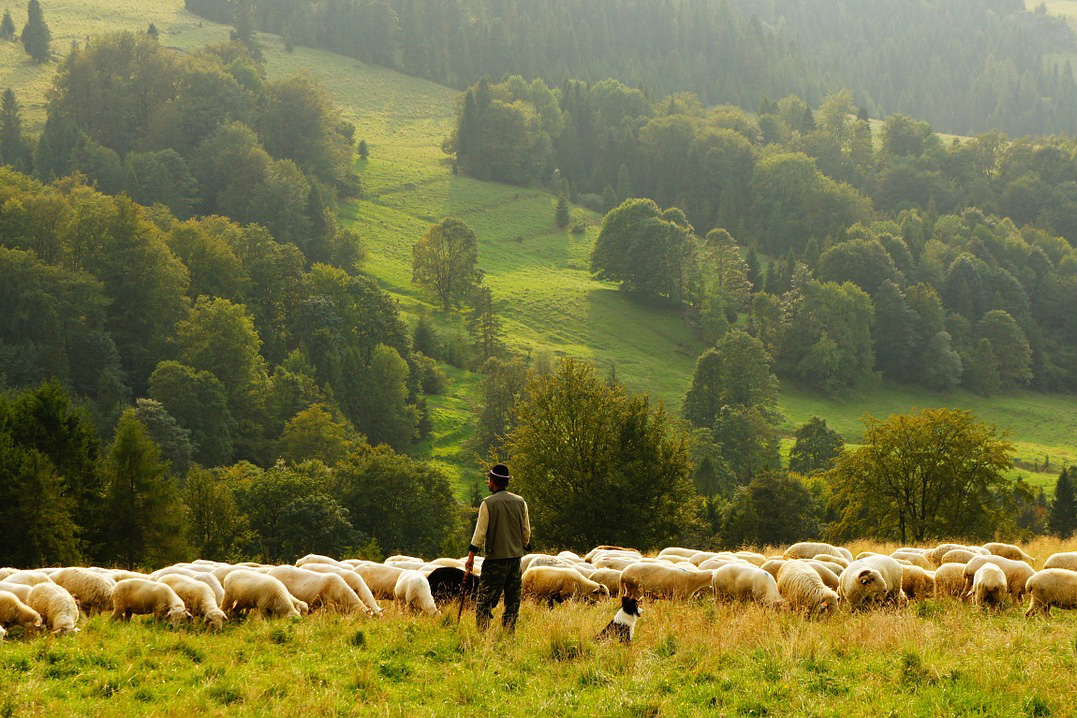
In the days of Jesus it was almost unthinkable for a person to make a lengthy journey alone. Once a person left the relative safety of the town, the journey got dangerous. There were robbers lying in wait along the roads just looking for vulnerable targets. For this reason people almost always made journeys in groups.
This is a good image for the spiritual journey we must all make. Alone we are easy targets. We are vulnerable and without help when spiritual demons attack.
Yet another insight says, Feuding brothers reconcile when there is a maniac at the the door.
Somehow I thought of all this when I saw these two videos. They are clever and make the point of partnership or perish, teamwork or terror, love or lose, hang together or hang separately. Yes, woe to the solitary man! How necessary the protection of the flock. How necessary for the herd to stay together.